
A Guide To The Azerbaijani Alphabet

Author
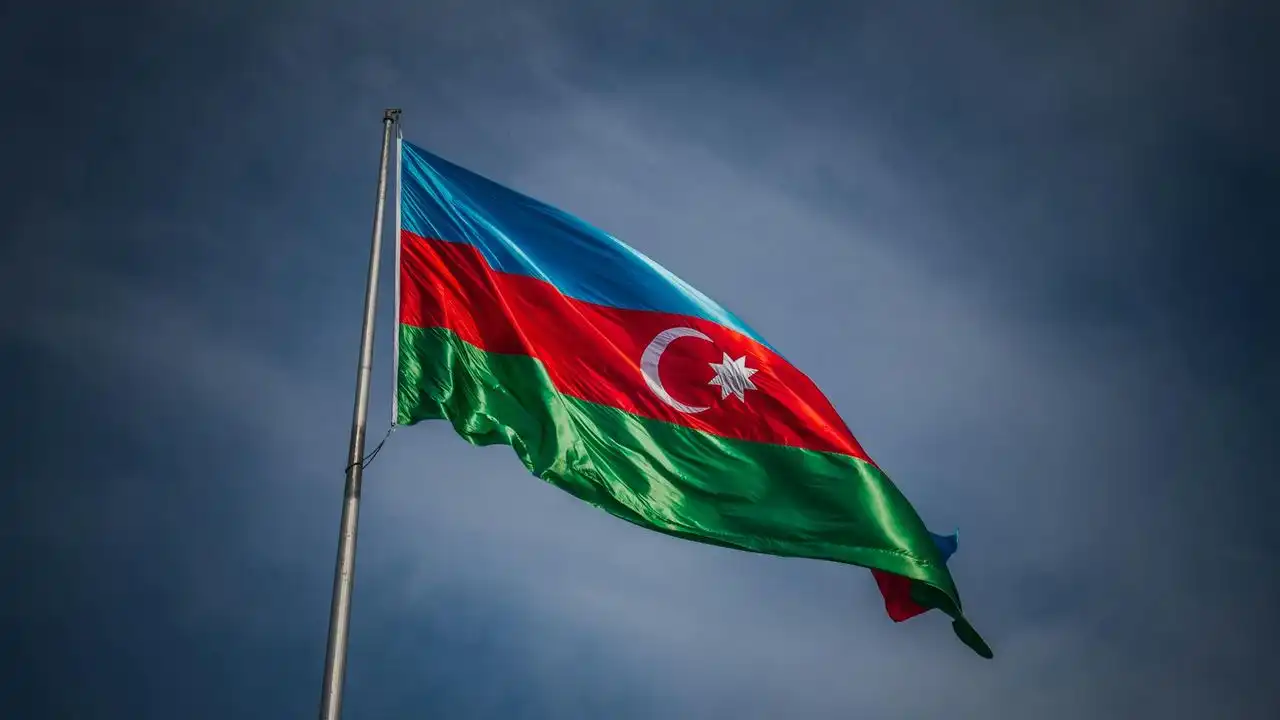
Learning the Azerbaijani alphabet is the first step to mastering the language.
The modern alphabet is very straightforward for English speakers to pick up.
It consists of 32 letters and is written using the Latin script.
Each letter represents exactly one sound, making reading and pronunciation incredibly consistent.
Table of contents:
The modern azerbaijani alphabet
The alphabet used in the Republic of Azerbaijan today is based on the Latin script.
It was officially adopted in 1991 to replace the Cyrillic alphabet.
There are 32 letters in total.
You’ll find 9 vowels and 23 consonants in the Azerbaijani language.
There are no silent letters, meaning you pronounce every letter exactly as it’s written.
Here’s a complete breakdown of the letters, their sounds, and an example word for each.
| Letter | English Sound Approximation | Example Word (Meaning) |
|---|---|---|
| A a | ’a’ in father | Ana (mother) |
| B b | ’b’ in bat | Baba (grandfather) |
| C c | ’j’ in jump | Can (soul) |
| Ç ç | ’ch’ in church | Çay (tea) |
| D d | ’d’ in dog | Dağ (mountain) |
| E e | ’e’ in pet | Ev (house) |
| Ə ə | ’a’ in cat | Ət (meat) |
| F f | ’f’ in far | Fil (elephant) |
| G g | ’g’ in get | Göz (eye) |
| Ğ ğ | Similar to ‘r’ in French Paris | Ağac (tree) |
| H h | ’h’ in hat | Hava (weather) |
| X x | ’ch’ in Scottish loch | Xeyr (no) |
| I ı | ’e’ in roses (a short, deep ‘uh’ sound) | Qız (girl) |
| İ i | ’ee’ in see | İş (work) |
| J j | ’s’ in measure | Jurnal (magazine) |
| K k | ’k’ in kite | Kitab (book) |
| Q q | A hard ‘g’ sound deep in the throat | Qara (black) |
| L l | ’l’ in leg | Lalə (tulip) |
| M m | ’m’ in man | Mən (I) |
| N n | ’n’ in now | Nar (pomegranate) |
| O o | ’o’ in more | Od (fire) |
| Ö ö | ’ur’ in burn | Öz (self) |
| P p | ’p’ in pen | Pul (money) |
| R r | Rolled ‘r’ | Rəng (color) |
| S s | ’s’ in sun | Su (water) |
| Ş ş | ’sh’ in shoe | Şəhər (city) |
| T t | ’t’ in top | Top (ball) |
| U u | ’oo’ in boot | Uşaq (child) |
| Ü ü | ’ew’ with rounded lips | Ürək (heart) |
| V v | ’v’ in van | Var (there is) |
| Y y | ’y’ in yes | Yol (road) |
| Z z | ’z’ in zoo | Zaman (time) |
Vowels in the azerbaijani language
Azerbaijani has 9 vowels in total.
These vowels are: a, e, ə, ı, i, o, ö, u, ü.
You’ll notice some special characters that don’t exist in the standard English alphabet.
The letter ə is the most common letter in the entire Azerbaijani language.
It sounds exactly like the short ‘a’ in the English word “cat” or “apple”.
Another important pair to understand is ı (undotted i) and i (dotted i).
The dotted i sounds like “ee”, while the undotted ı is a deeper sound made in the back of your mouth, similar to the “e” in “roses”.
Azerbaijani also relies heavily on a rule called vowel harmony.
This means that words usually contain only “front” vowels (e, ə, i, ö, ü) or only “back” vowels (a, ı, o, u).
Understanding this will help you immensely when you start adding grammar endings to words.
Consonants to watch out for
Most Azerbaijani consonants sound identical to their English counterparts.
However, there are a few tricky letters you should pay special attention to.
The letter c is always pronounced like a “j” in English.
For example, the word can is pronounced like “John”, not “can”.
The letter ç with the small tail underneath represents the “ch” sound.
The letter ğ is unique because it never starts a word in Azerbaijani.
It sounds like a soft gargle in the back of your throat, very similar to a Parisian “r”.
The letter x has a rough, breathy sound, exactly like the “ch” in the Scottish word “loch”.
Finally, the letter q is pronounced further back in the throat than a regular “g”, creating a deep, heavy sound.
Regional differences in the azerbaijani alphabet
The Azerbaijani language is spoken in different countries, primarily the Republic of Azerbaijan and northwestern Iran.
Because of this geographic split, the written language looks very different depending on where you are.
In the Republic of Azerbaijan (North Azerbaijani), the Latin alphabet we discussed above is the official script.
However, millions of native speakers live in Iran (South Azerbaijani).
In Iran, South Azerbaijani is written using the Perso-Arabic script.
This Arabic-based alphabet is read from right to left.
It doesn’t always write out the short vowels, which can make reading it slightly harder for beginners.
Despite these two completely different writing systems, the spoken language is highly mutually intelligible.
A speaker from Baku (using the Latin script) can easily converse with a speaker from Tabriz (using the Arabic script).
